Consulting
Experience
Expertise in Finance, Accounting & IT

The regulatory landscape for tax reporting and documentation requirements is undergoing profound structural change worldwide. Electronic invoicing, real-time reporting, and standardized data formats are evolving from optional procedures to mandatory compliance standards in many countries. In parallel, SAP is consolidating and modernizing its solutions for tax reporting and documentation requirements under the umbrella of SAP Document and Reporting Compliance (DRC). While DRC was initially perceived primarily as a reporting and localization solution, a strategic realignment is now evident: DRC is developing into a central compliance layer within modern SAP architectures – particularly in conjunction with SAP S/4HANA and the SAP Business Technology Platform (BTP).
The years 2025 and 2026 mark a phase of fundamental changes:
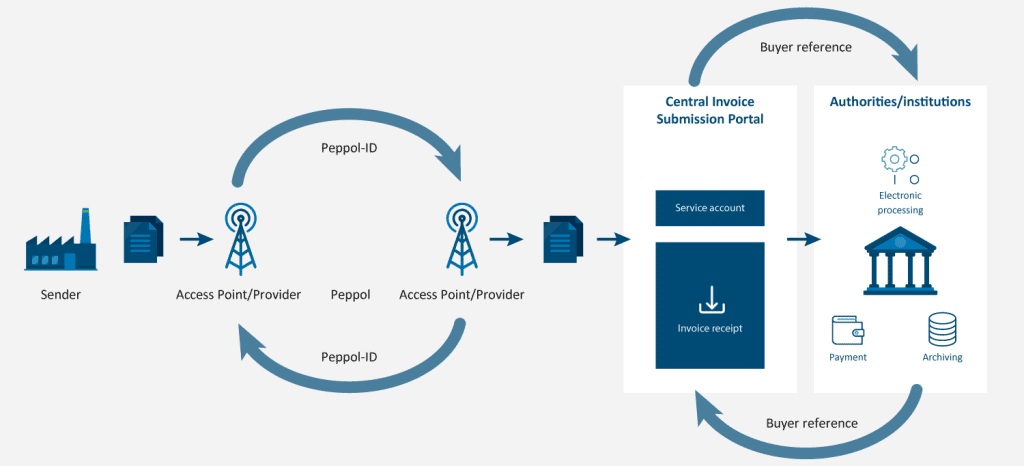
Source: Federal Ministry of the Interior (2025)
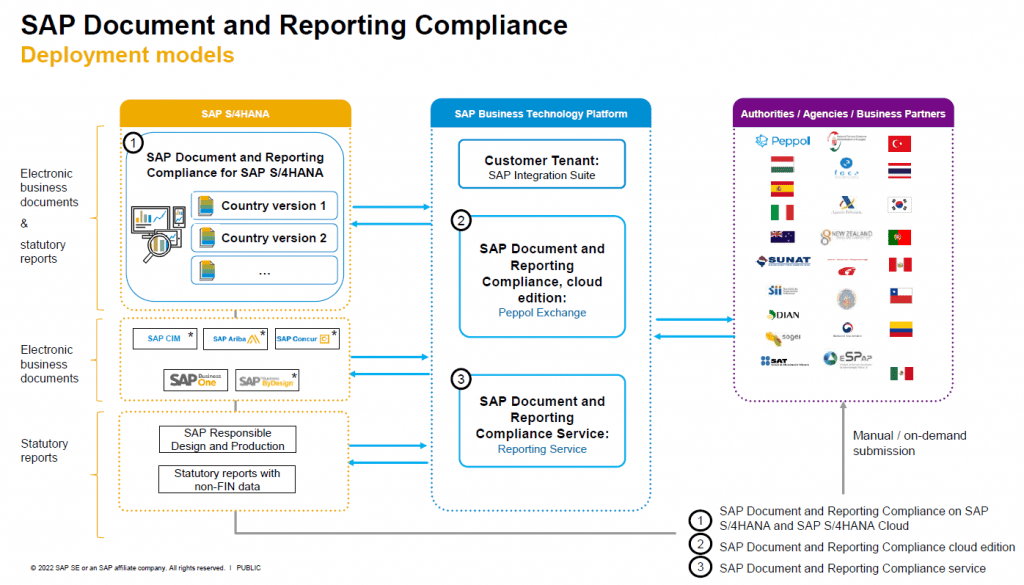
One of the most significant developments is the migration of existing compliance services to the DRC Cloud Edition. SAP aims to consolidate electronic invoicing, tax reporting, and communication with authorities on a single platform.
Key aspects of this transformation:
This transformation is not merely a technical upgrade. It represents a strategic repositioning. Compliance functions will no longer operate in isolation, but will be more strongly integrated into core transactional processes.
For companies, this means specifically:
Parallel to the technological transformation, regulatory requirements in Europe are becoming significantly stricter. The introduction of mandatory electronic invoices and the planned EU reform "VAT in the Digital Age" (ViDA) are leading to a structural realignment of VAT compliance.
Germany is gradually introducing mandatory electronic invoicing in the B2B sector. Starting in 2025, there will initially be an obligation to receive electronic invoices. In subsequent years, the obligation to issue electronic invoices will be expanded until ultimately all B2B transactions must be processed electronically. This development is not an isolated national process, but rather part of a Europe-wide trend towards standardized, digital reporting procedures.
The EU initiative ViDA goes even further. It envisions transmitting transaction data to tax authorities in near real-time. This shifts the focus from periodic reporting to continuous transaction monitoring. For companies, this means:
This regulatory dynamic increases the pressure on companies to systematically modernize and centrally manage their compliance architecture.
Outside of Germany, numerous countries are also pushing forward with mandatory electronic invoicing and reporting systems. In many cases, these are so-called Continuous Transaction Controls (CTC), where transactions must be validated or pre-approved in near real time. The individual countries are pursuing different regulatory approaches, ranging from centralized government clearance systems and reporting models to network-based transmission structures. The following overview presents selected European initiatives and their basic design.
| Country | System | Preface | characteristics |
| Germany | B2B e-invoicing obligation | 2025–2028 | Structured format (XRechnung, ZUGFeRD), no clearance system |
| Poland | KSeF | from 2026 | Clearance system via central government platform |
| France | E-Invoicing & E-Reporting | from 2026 | Hybrid model (PDP + government portal) |
| Belgium | Peppol | from 2026 | Network-based invoice transmission |
| Italian | SDI | already mandatory | Central validation by the tax authority |
| Spain | VeriFactu | gradually | Reporting model with near real-time transmission |
Parallel national initiatives are leading to an increasing fragmentation of regulatory requirements, while at the same time the need for technical standardization within corporate systems is growing. For internationally operating companies, this means that national compliance requirements must be increasingly integrated into global IT and process architectures. Platform solutions such as SAP Document and Reporting Compliance (DRC) They can act as a central integration layer, through which different national reporting requirements can be implemented in a standardized way.
In addition to regulatory requirements, SAP's technological roadmap significantly shapes the further development of DRC. The platform is increasingly being positioned as an integral component of cloud-based ERP architectures.
Furthermore, SAP is working on intelligent functions for data validation and error analysis. The goal is to identify compliance risks early and address deviations system-wide. This transforms DRC from a reactive reporting solution into a proactive management tool within the financial architecture.
The developments described above are leading to a fundamental reassessment of the role of compliance technology. Companies are not only facing technical migrations, but also a structural transformation of their tax and reporting processes. Particularly in the context of S/4HANA transformations, DRC is gaining strategic importance. If compliance is not integrated early on, subsequent adaptation costs and operational risks will arise. Furthermore, the increasing regulatory dynamism is driving the need for clear governance structures. Companies must define how regulatory changes are identified, assessed, and implemented within their systems. In addition, responsibility is increasingly shifting from purely operational departments to interdisciplinary teams from IT, tax, and finance. Compliance is thus becoming a strategic management issue and no longer merely an administrative obligation.
Best practices from transformation projects show that early strategic integration of DRC into the ERP roadmap significantly reduces implementation risks.
In the coming years, a further expansion of mandatory real-time reporting models is expected. National initiatives will increasingly be complemented by harmonized European initiatives. At the same time, SAP will consistently expand its cloud strategy and further standardize compliance functionalities. The role of DRC will continue to evolve from a purely localization and reporting solution to a global compliance integration layer. Companies that define a consistent target architecture early on can not only meet regulatory requirements but also use them as a lever for process standardization and increased efficiency.
Recent developments surrounding SAP Document and Reporting Compliance illustrate that companies are undergoing a phase of structural reorganization of their compliance architecture. The migration to cloud-based solutions, mandatory e-invoicing regulations, and the ViDA initiative are fundamentally changing the requirements for financial and tax processes. SAP DRC should therefore no longer be viewed as an isolated reporting tool, but rather as a strategic component of modern ERP and tax technology architectures. An early, systematic roadmap is crucial to minimizing regulatory risks while simultaneously realizing sustainable efficiency gains.